Shipyard Series
Azimut Yachts: What Buyers Need to Know Before You Commit
By Dan Ribeiro, CPYB — The Yacht Trader · 2026-03-05
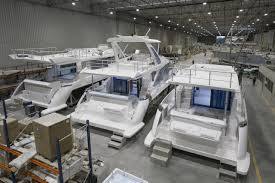
Azimut Yachts has built its reputation on combining Italian design with scalable production and advanced composite engineering. From the Fly and S series to the long-range Magellano and the flagship Grande line, Azimut offers broad market coverage — but each segment carries different ownership economics, performance profiles, and resale dynamics. This article breaks down where Azimut fits in the global brokerage landscape, how depreciation behaves across production models, what buyers often overlook in surveys and systems, and how to structure a disciplined acquisition strategy. The focus is not aesthetics — it is valuation, risk management, and long-term asset positioning.
Azimut Yachts stands among the few builders in the global marketplace that combine Italian design sensibility with production scale and engineering depth. For buyers considering anything from a flybridge cruiser in the 40–60-foot range to a full-blown Italian Grande superyacht, understanding what Azimut is and where it fits in the market is essential.
This post breaks down the brand’s history, model philosophy, performance characteristics, and market realities — the practical facts a serious buyer should internalize before drafting an offer.
Where Azimut Sits in the Luxury Yacht Landscape
Azimut was founded in 1969 in Italy and today is part of the Azimut-Benetti Group, one of the largest yacht builders in the world. The range spans sports yachts, flybridge cruisers, trawler-style models, and the Grande series of mega motor yachts. The breadth gives buyers options, but it also means broad differences in handling, cost of ownership, and resale dynamics across classes.
From an ownership perspective:
- Flybridge cruisers (Fly range) combine usable deck space with family-oriented layouts.
- S range sport yachts are performance-forward and visually distinctive.
- Magellano range offers efficient cruisers with trawler-style stability.
- Grande series scales up into the superyacht category with luxury volume and systems depth.
Design Philosophy: Italian Style Meets Practical Engineering
What sets Azimut apart — and what draws many owners — is its design. Italian styling remains a core brand tenet: expansive glass surfaces, flowing profiles, and interior spaces that prioritize volume and light. Azimut was among the early adopters of broad hull openings and large saloon windows, and its material and finish standards in newer models reflect this aesthetic focus.
On the engineering side, Azimut balances performance and comfort. Depending on the model, you’ll see IPS drives for efficient cruising, stepped hull designs for sea keeping, and optional stabilization packages across mid- to large-size boats. The payoff is generally predictable seaway motion with competitive cruise speeds for the class.
Market Value and Pricing Dynamics
Across the U.S. resale market, Azimuts can vary dramatically in price:
- Smaller flybridge yachts (40–60’) are often found in the $300k–$1M+ segment depending on year and spec.
- Mid-size cruisers and sport yachts typically command multiples of that as size and amenities climb.
- Grande models and superyachts sit well into multi-million territory with corresponding operating costs.
Two practical realities buyers should factor in:
- Depreciation on production yachts can be sharper in early years versus bespoke builds.
- Maintenance and survey costs on European craft — especially larger Azimuts — require experienced technical representation.
Third-party valuation tools and recent market comps should always be part of an offer strategy; relying solely on asking prices skews perception. A thorough sales comparison adjusted for condition, hours, and refit history is non-negotiable.
Common Buyer Pitfalls with Azimut
In brokerage work, I’ve seen patterns that repeat:
- Underestimating systems complexity: Larger Azimuts — particularly those with extended electronics suites and stabilization systems — require specialized service and preventive maintenance planning.
- Assuming all Azimuts are the same: There’s a big difference between an entry-level flybridge 50 and a 72 in terms of both use case and cost structure.
- Ignoring resale influences: The broader market, charter activity, and regional demand all impact liquidity, especially for older models.
These are not brand-specific warnings — they apply across marine brokerage — but the breadth of Azimut’s lineup amplifies them.
Making an Informed Offer
A structured due-diligence process is essential:
- Purchase a recent market sales report.
- Engage technical survey early.
- Compare against true market comps, not just current listings.
- Build a clear post-purchase budget (service plan, delivery costs, refit allowances).
Treat the transaction like a capital asset acquisition, not a casual lifestyle buy. Yachts are complex assets; Azimut offerings are especially so, given their technical scope and performance goals.
Final Fact
Azimut is a legitimate contender in every segment it enters, but success as an owner depends on rigorous evaluation and ongoing ownership planning. Clarity on what you need versus what the market offers will separate a good purchase from an expensive lesson.